
Sicily: Where History is Still Lived


Our seventeen days in Sicily came together the way many of our favorite trips often do. We were planning to spend that time in Budapest and Vienna, two cities we were genuinely excited to visit. But as the departure date approached, the weather kept nudging us in a different direction. Cold temperatures, steady rain, and strong winds were in the forecast, and we could already picture ourselves bundled up and rushing from one indoor space to another. That wasn’t how we wanted to experience those cities.
So we did what travel has taught us to do over time. We listened. We changed plans. And we went to Sicily instead.

In a way, it felt like closing a long-open loop. We’ve been to Italy several times and have always loved it. On a previous trip to southern Italy, Sicily had been part of the plan, but we got Covid and had to cancel that portion of the journey. Ever since then, Sicily stayed in the back of our minds as a place we still wanted to experience. This time, the timing felt right. Everything lined up, and we finally went.
You can visit Sicily briefly and enjoy it. You’ll see beautiful places, eat well, take photos, and leave with good memories. But you won’t truly know it. There is simply too much here for a short visit to do it justice. Like Italy itself, it’s best experienced over time, across multiple visits, spread out over years.

People return to Italy again and again, each trip focused on a different region or a different phase of life. Sicily deserves that same approach. It isn’t one place. It’s many places on a single island, with cities that feel nothing alike, landscapes that shift quickly, and evidence of different eras and civilizations visible side by side.
One thing becomes clear early on. Sicily is not simply an extension of mainland Italy. Yes, it is Italy, and Sicilians are Italian. But they are Sicilian first, and that distinction matters here.

This island has always stood apart. Over thousands of years, it has been shaped by many civilizations - Greeks, Romans, Arabs, Normans, Spaniards - each leaving something behind without erasing what came before. That history shows up everywhere: in the buildings, the food, the pace of life, and in how people relate to the island itself. As one waiter we met said, “The difference between Italy and Sicily is a 1000 years, and that history is still alive.”

If you arrive expecting the charm or polish you might associate with parts of northern or central Italy, Sicily can feel rougher around the edges. It’s not as wealthy, and things don’t always work smoothly or quickly. Infrastructure can be inconsistent, and patience becomes part of the experience. But what Sicily may lack in refinement, it more than makes up for in character.
Life here feels honest. Buildings show their age. Streets are lived in. The island doesn’t try to impress or perform. It simply exists as it is and invites you to meet it on its own terms.
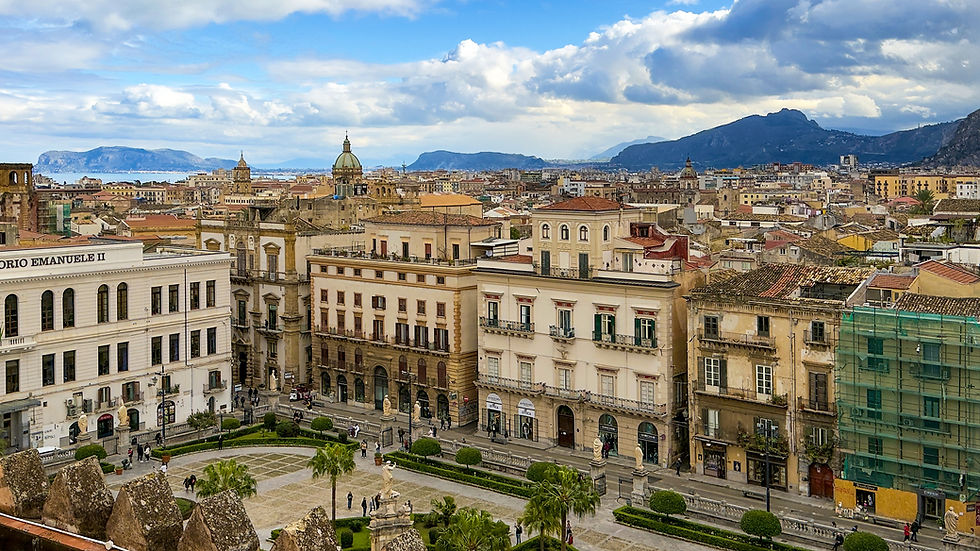
We based ourselves in two places: one week in Palermo and ten days in Ortigia, the historic center of Syracuse. From there, we took several day trips, including Taormina, the Valley of the Temples, the baroque towns of Noto, Ragusa, and Modica, and Villa Romana del Casale in Piazza Armerina.
Palermo set the tone for the trip. It’s loud, chaotic, soulful, and deeply alive. History isn’t tucked away; it spills into the streets. Markets buzz, architecture layers itself across centuries, and daily life unfolds at full volume. Palermo doesn’t ease you in. It asks you to meet it honestly, and we appreciated that right away.

Ortigia felt completely different. Calm and walkable, it was a place where daily life felt manageable and unhurried. Mornings started with walks and coffee, evenings were often spent near the water. It didn’t feel like a place performing for tourists. It felt lived in, comfortable, and easy to imagine returning to.

It also turned out to be the perfect base for exploring the rest of the island. When we weren’t out on day trips, it was simply a wonderful place to be. And when we did set out to explore, its location made getting to so many places fairly easy.
Taormina was our first day trip, and it’s impossible to deny its beauty. Set high above the coast with Mount Etna rising in the distance, the ancient Greek theatre alone is worth the visit. Standing there, with the sea below and the volcano behind you, it’s easy to understand why people have been coming here for centuries.

The Valley of the Temples had a different effect on us. Walking among the ancient Greek ruins, surrounded by open land and sky, you’re struck by how long these structures have been standing. The temples have been there for thousands of years, and you don’t need much explanation to understand their significance. Being there speaks for itself.

The baroque towns of Noto, Ragusa, and Modica showed us another side of Sicily. After a devastating earthquake in 1693, these towns were rebuilt almost entirely. The Baroque style emerged as a way for the Catholic Church to assert itself during the rise of Protestantism, using wealth and spectacle to make its point. The result is imaginative, dramatic, and visually striking.

Villa Romana del Casale was jaw-droppingly impressive. Room after room is filled with remarkably well preserved mosaics depicting daily life, mythology, and nature, all dating back to the fourth century. We’ve seen Roman mosaics elsewhere, but nothing compares to this. Reading about ancient Rome is one thing; standing inside it is something else entirely.

In Sicily, the past doesn’t feel preserved. It feels lived in, and you sense that most clearly through the food.
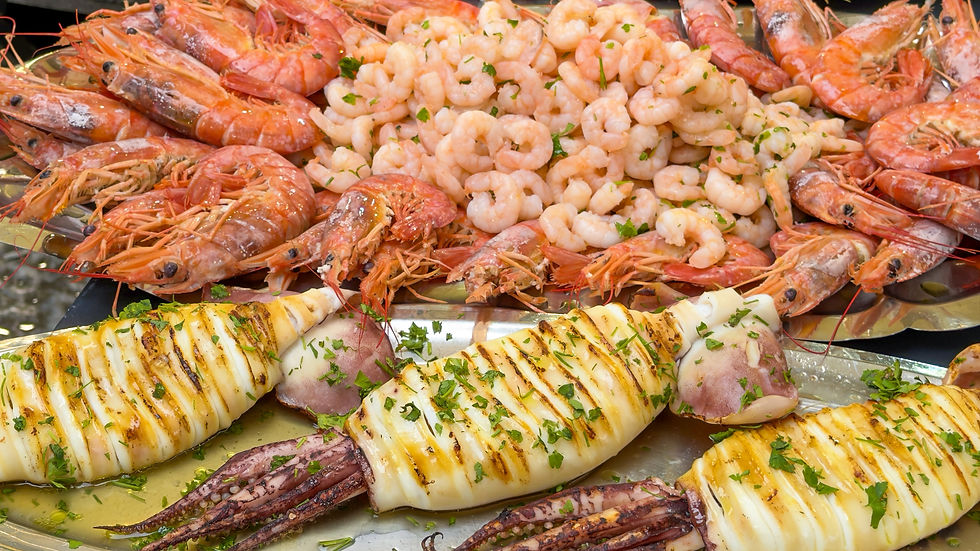
Food here isn’t just something you eat. It’s part of everyday life, not only in restaurants but in markets, bakeries, and street stalls where people shop daily. The markets are loud and busy and full of activity. Fresh fish, vegetables straight from the fields, bread, cheese, olives, and pastries. Food here is social. It’s talked about, shared, and enjoyed.

Yes, the pasta and pizza live up to the hype. They’re simple, well made, and deeply satisfying, built around good ingredients and straightforward preparation. And then there are the cannoli - crisp shells, fresh ricotta, just enough sweetness. You quickly realize that what you’ve eaten elsewhere was only an approximation. In Sicily, cannoli are simply part of everyday life.

Sicily also carries a history that gives some people pause. The Mafia is part of the island’s past, and it’s understandable that visitors wonder about safety.
The Mafia emerged in the 1800s during a time of poverty and weak government. For many years speaking out came at a terrible cost. The murders of judges Giovanni Falcone and Paolo Borsellino in the early 1990s marked a turning point. What followed was real change. Arrests were made, laws were strengthened, and Sicilian society itself shifted. People began to speak openly, younger generations rejected silence, and properties once owned by Mafia families were reclaimed and put to good use.

Does the Mafia still exist? In limited ways, yes. But it does not define daily life today, and it does not shape the experience of visitors.
In our experience, Sicily felt safe. We walked through cities and small towns, day and night, and felt comfortable throughout our stay. What we encountered instead was warmth, humor, generosity, and deep pride in culture, food, and family.

Sicily gives a great deal - beauty, history, food, warmth, and depth. All it asks in return is time. Time to wander without an agenda. Time to sit. Time to return. Time to let the island speak in its own way.
Sicily isn’t a place you “do” in one visit. It’s a place you begin a relationship with, one that deepens each time you come back. And once you understand that, the island makes perfect sense.


I very much enjoyed my trip to Sicily with you, Simcha