
The Moral Beauty of a Walkable Life


We’ve been back in the States for about three weeks, and already the car has become a central part of our lives again.
I suppose I shouldn’t be surprised. I’ve lived most of my life in this country, so I know how things work here. But after six weeks in Chania, Greece, where walking is part of the ordinary rhythm of the day, coming home still takes a little adjusting. In Chania, almost everything you need is close enough to reach on foot. Back home, even a simple errand means keys, traffic lights, parking lots, and more patience than a simple errand should require.
And I know, in the long list of things this country needs to improve, car dependence may not sound like the most urgent problem. Healthcare, poverty, equality, justice - the list is not short. And yes, I’ve written about those things too.
But I don’t think the way we move through daily life is a small matter. Our reliance on cars has shaped more than our errands. It has shaped our towns, our habits, our distance from one another, and even our idea of freedom. From what I’ve seen and felt, this dependence has come at a real cost to the way we live.
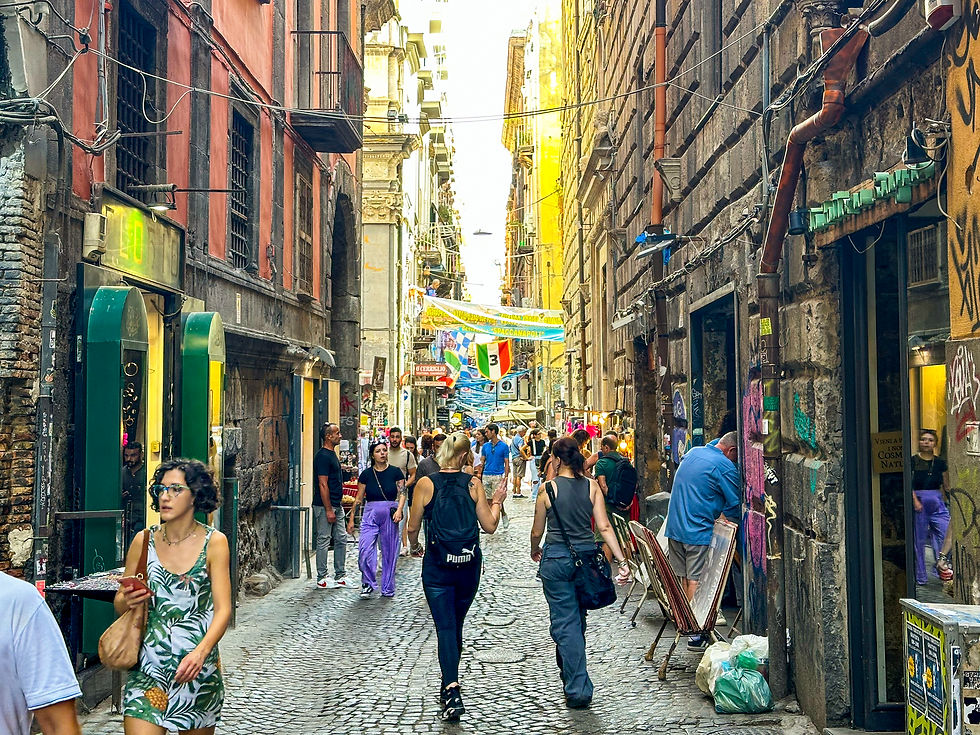
In much of Europe, walking isn’t a hobby or a fitness plan. It’s simply how life works. You step outside, and the town or city is right there. A trip to the market, dinner out, even an evening walk - none of it feels like a separate errand or event. It’s just part of life.
That may be what I miss first when we come home: walking as a normal part of life.
In many parts of the United States, walking can feel as if it was never taken seriously as part of ordinary life. Even a short walk can become more difficult than it should be, with wide roads to cross, fast traffic beside you, parking lots to navigate, or no safe sidewalk where one should be. So we drive, not because people are lazy - that’s the easy and ungenerous explanation - but because so much of this country was built around cars. Ordinary errands often require a vehicle before they can even begin.
Places teach us how to live. That’s something I think we often miss. We talk a lot about personal choices, but the world around us shapes those choices every day. If a place makes walking natural, people walk. If it makes walking unpleasant or unsafe, people stop walking. Then we act as if that says something about the people, when it may say more about the place.

The more Carla and I travel, the more clearly I see how much this matters. A car-centered life changes the pace of the day. It changes how we know a town and how often we casually see one another without planning anything. We move from one enclosed space to another, getting things done quickly and efficiently, but missing some of the life that happens between the places.
When you walk, the world has time to show itself. There’s the light on a building, the feel of a street, the little corner where people gather, or the old man taking his morning walk. You hear bits of conversation and catch the smell of coffee, fresh bread, or the sea if you’re lucky. None of this makes the news, but it does make the day feel more human.
From a car, much of that can slip by. You can pass through a place without really feeling part of it, and the world becomes scenery. On foot, you enter it more fully. The sounds, faces, and small moments have time to reach you. You begin to know a place by being in it, not just passing through.
And you begin to see people differently too. A walkable life brings small, ordinary encounters that slowly make a place feel familiar. You recognize a shopkeeper, nod to someone on the sidewalk, or notice the same person walking the same dog each morning. After a while, it no longer feels like a place full of strangers.

You don’t have to know people well for their presence to change the feeling of a place. Sometimes it’s enough to see them regularly and remember that other lives are unfolding right beside yours, with their own weariness, hopes, routines, and whatever the day has handed them. For a moment, you share the same street.
That’s part of what I mean by the moral beauty of a walkable life.
Yes, walking is healthier and better for the environment, and both of those things matter. But there’s more to it than that. A walkable town or city is more humane because it allows more people to take part in ordinary life, including those who can’t drive, don’t want to drive, or can’t afford to make a car the price of admission.
That’s where the moral question begins.
When a community is built mostly around cars, it ends up deciding who can move through the world easily and who can’t. If you can drive, pay for the car, keep up with everything that comes with it, and find a place to park, the world opens more easily. If you can’t, life becomes harder than it needs to be, not because of some personal failing, but because the design itself has made it harder.
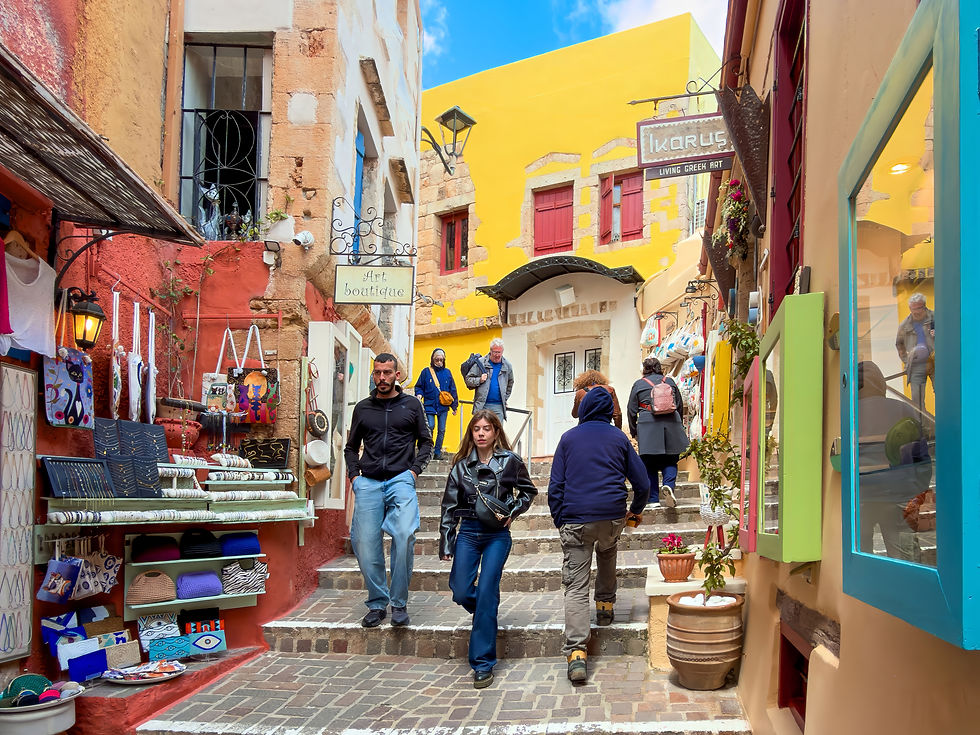
A car-centered place can be full of people and still feel strangely empty. Streets become something to get through rather than places to be. People disappear into houses, cars, offices, and stores, and we may live near one another while rarely meeting in any real way.
A walkable place feels different because life naturally comes outside. People linger, cafes spread onto sidewalks, older people remain part of the everyday life of the town, and children grow up seeing adults move through the world on foot, at a pace that feels human. Even strangers begin to feel familiar because they keep appearing in the same places. The street becomes more than a route from here to there. It becomes part of the life around it.
I thought about this often in Chania, especially in the evening along the harbor, where people weren’t there for any special occasion but simply to be out in the world together. Families strolled as children wandered ahead and then rushed back. Older couples sat together, shopkeepers stood in doorways, and travelers moved slowly through it all. Everyone shared the same public space as if it were the most natural thing in the world. Nobody had to call it community. It was simply happening.
I thought about it in Venice too, where getting lost on foot isn’t really a mistake. It’s practically the point. You turn a corner, cross a little bridge, follow a narrow lane for no good reason, and suddenly find yourself somewhere you hadn’t planned to be. Sometimes that turns out to be the best part of the day.
Of course, European cities aren’t perfect. They have traffic, noise, crowds, housing pressures, and plenty of irritations of their own. I’m not trying to turn them into postcards. But many of them have held onto something we’ve given away too casually in the United States: the idea that ordinary life should still be possible at the pace of a human being.

Some of our happiest travel days prove that point, though they don’t sound impressive when described later. Carla and I walk out the door with no great plan. We may have a general direction, or we may simply follow whatever street looks inviting. We stop for coffee, wander longer than expected, sit somewhere because it feels good to be there, and eventually find our way back with tired feet and a few photographs of small, ordinary things that may not look important to anyone else but somehow hold the feeling of the day for me. It doesn’t sound like much, but those are often the days that stay with me.
I think it’s because walking puts me inside the day. My body is moving, my senses are awake, and instead of being sealed off from the world, I’m part of it.
That’s much harder to feel from a car.
I’m not against cars. They’re useful, and in many places they’re necessary. This is a large country, and many people couldn’t manage their lives without one. I’m grateful for the freedom a car can provide, especially when the alternative is carrying groceries three miles in the August heat.
But we’ve paid a price for making the car the center of so much of our life. We gained speed and convenience, but we lost some of the easy daily contact that helps us feel connected to one another. We built places that may function in practical ways but often fail in human ones.

Walking offers something different. It may take longer, but it gives more back. It gives us movement, air, attention, and a better sense of where we are. It turns the space between destinations into part of the experience instead of dead time to get through.
There’s also a kind of humility in walking. On foot, you can’t rush past a place or stay above it all. You meet it at ground level, feel the weather, wait your turn at the crossing, and make room for other people. Walking reminds us that we’re not just busy minds moving from one task to the next. We’re bodies, neighbors, and part of something shared.
I wish we valued that more.
I wish more towns and cities in the United States were built so people could walk safely and naturally as part of ordinary life. Public transportation shouldn’t be treated as an afterthought, and neither should the simple things that make people feel welcome outside. A shaded sidewalk, a safe crossing, a bench in the right place, a bus that actually comes, or a street where people feel comfortable lingering - these are not luxuries.

That’s why I miss walking so much when we come home. I miss stepping outside and feeling that the day is already available. I miss the small discoveries, the familiar streets, and the slow way a place becomes known by moving through it on foot.
Mostly, I miss living at a human pace.
Walking won’t solve everything, of course. But it does change how we experience a place and how we feel moving through it. It gives us time to notice, lowers the noise of the day, and reminds us that life is not only what happens when we arrive.
So much of life happens along the way.
And that’s the moral beauty of a walkable life. It brings us back to the world, back to one another, and back to ourselves, one ordinary step at a time.


Nice article.
Spot on! You ended one paragraph with the phrase, “… the idea that ordinary life should still be possible at the pace of a human being.” I misread it as, “the pace of human being” — “human being” as a gerund. I love that you and Carla are exploring “being” as much as “doing” — that being in a moment can be as much a luxury as living event-to-event (much less driving and speeding from one to the next). Thanks for this lovely article, and here’s to more human being.
Simcha, you’re observations are spot on. You ought to read The Geography of Nowhere if you haven’t. A good explanation as to how America was coerced into becoming addicted to automobile travel